
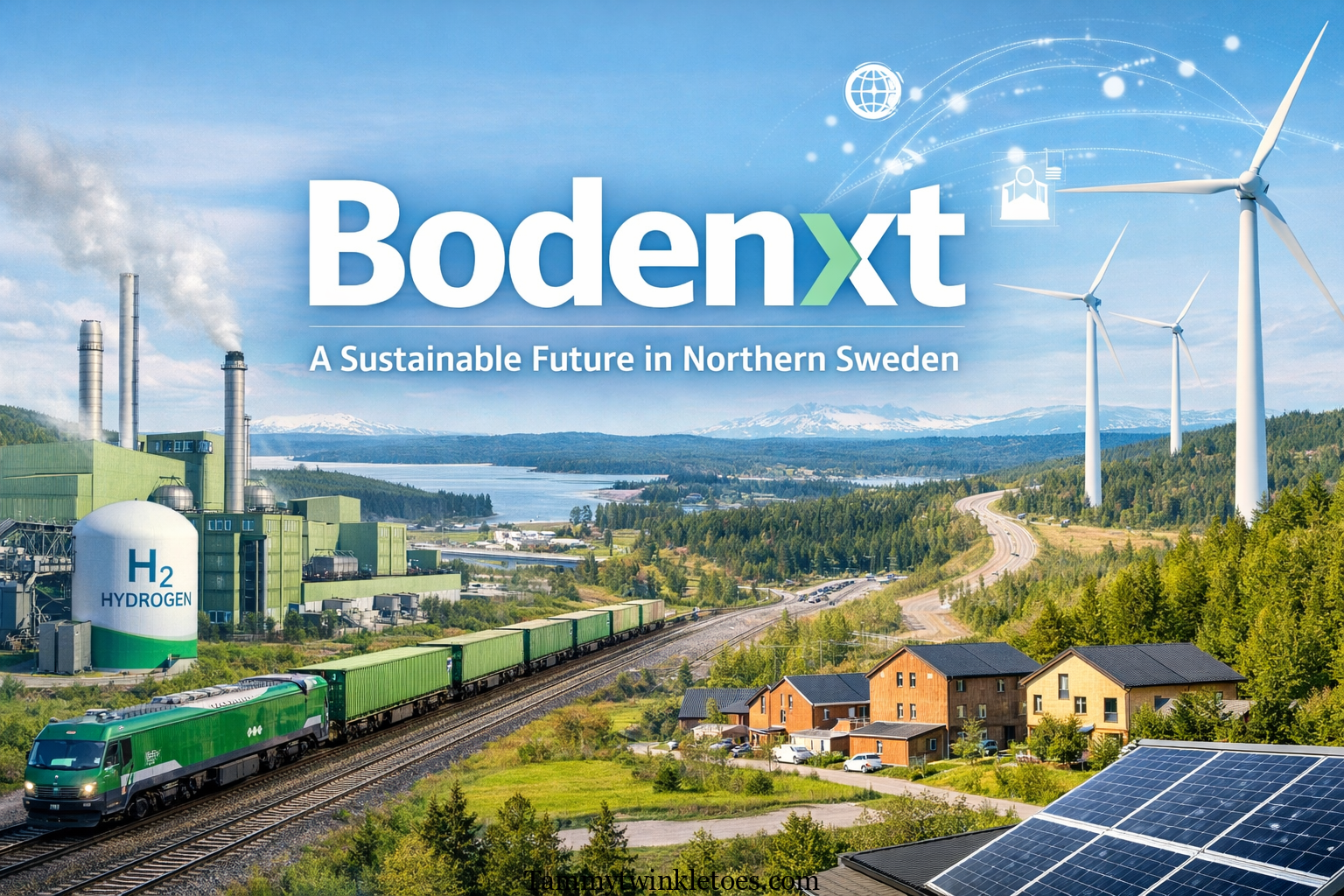
Introduction to Bodenxt
Across the world, cities are searching for ways to balance economic growth with environmental responsibility. Industrial expansion has historically brought prosperity, but it has also created environmental challenges that governments and communities now strive to overcome. In northern Sweden, one ambitious initiative is demonstrating how large-scale development can align with sustainability and innovation. This initiative is known as Bodenxt.
Bodenxt represents a long-term strategic transformation program designed to guide the development of the Swedish city of Boden during a period of rapid industrial change. As global industries move toward cleaner energy and climate-friendly manufacturing, the region surrounding Boden has become a focal point for new investments in green technology, renewable energy, and sustainable production systems.
Rather than allowing industrial growth to occur without planning, the Bodenxt initiative was created to manage this transformation carefully. Its goal is to ensure that economic expansion supports not only businesses and investors but also local communities, infrastructure, and environmental sustainability. Through coordinated planning, Bodenxt seeks to create a balanced model of development that can serve as an example for other cities around the world.
The Origin and Meaning of Bodenxt
The term Bodenxt combines the name of the city “Boden” with the word “next.” Together, the phrase symbolizes the next chapter in the city’s history. It reflects a vision in which the region evolves from a traditional industrial and military center into a modern hub for sustainable industry and technological innovation.
The initiative emerged as large-scale investments began to reshape the economic landscape of northern Sweden. Major companies started exploring opportunities in the region due to its access to renewable energy, available land, strong infrastructure, and strategic location within Europe’s growing green economy.
City planners and government officials realized that such rapid growth would require a coordinated strategy. Without careful planning, population increases and industrial expansion could strain housing, transportation, education, and social services. Bodenxt was therefore developed as a framework to guide long-term development while maintaining a high quality of life for residents.
Why Bodenxt Matters in the Global Green Transition
The global economy is undergoing a historic transformation as industries seek to reduce carbon emissions and move toward climate-neutral production. Heavy industries such as steel manufacturing have traditionally relied on fossil fuels, making them major contributors to greenhouse gas emissions.
Northern Sweden has emerged as a promising region for cleaner industrial production because of its access to renewable electricity generated from hydropower and wind energy. These energy resources allow companies to experiment with new production methods that significantly reduce carbon emissions.
Within this context, Bodenxt plays a crucial role. The initiative supports the development of industries that rely on renewable energy and sustainable technologies. By creating an environment where innovative companies can establish operations, the program helps accelerate the global transition toward low-carbon manufacturing.
The transformation taking place in Boden is not only important for Sweden but also for international climate goals. If successful, the industrial models developed here could inspire similar projects across Europe and beyond.
Economic Transformation Driven by Green Industry
One of the most significant aspects of Bodenxt is its connection to large industrial investments that are reshaping the regional economy. In recent years, companies focused on renewable energy and climate-friendly manufacturing have begun building facilities in the region.
These projects aim to produce materials such as fossil-free steel using hydrogen-based technology instead of coal-powered blast furnaces. This method drastically reduces carbon emissions and represents a major technological breakthrough for heavy industry.
As these projects progress, they create thousands of new jobs in engineering, construction, logistics, and energy production. The presence of large industrial facilities also attracts smaller companies that provide specialized services and components.
The result is a rapidly expanding economic ecosystem that benefits both local communities and international investors. Through Bodenxt, this growth is carefully coordinated to ensure that infrastructure, housing, and education systems expand alongside industrial development.
Urban Development and Housing Expansion
Rapid economic growth often brings population increases, and the city of Boden is preparing for this transformation. As new workers move to the region, demand for housing, schools, healthcare facilities, and public transportation is increasing.
Bodenxt addresses these challenges by promoting sustainable urban planning. Instead of allowing unplanned expansion, the initiative encourages the development of modern neighborhoods designed with environmental efficiency and quality of life in mind.
Urban planners are exploring ways to create residential areas that integrate green spaces, efficient public transport systems, and energy-efficient buildings. These developments aim to make Boden an attractive place not only for workers but also for families who want to build long-term lives in the region.
By focusing on thoughtful urban design, Bodenxt ensures that population growth contributes to a vibrant and sustainable community.
Infrastructure and Transportation Development
Infrastructure plays a critical role in supporting industrial growth and community development. As the Boden region experiences increased economic activity, transportation networks and utilities must be upgraded to accommodate new demands.
Bodenxt supports investments in roads, railways, energy systems, and digital infrastructure that connect industrial facilities with national and international markets. Improved transportation networks make it easier for companies to transport materials and finished products efficiently.
At the same time, infrastructure development focuses on sustainability. Renewable energy systems, efficient public transportation, and smart urban technologies are being incorporated into long-term planning strategies.
These improvements strengthen the region’s ability to support modern industry while maintaining environmental responsibility.
Education and Workforce Development
A thriving industrial economy requires a skilled workforce. Recognizing this need, Bodenxt promotes cooperation between industry, universities, and training institutions.
Educational programs are being expanded to prepare workers for careers in engineering, renewable energy, environmental technology, and advanced manufacturing. Technical training centers and universities are developing specialized programs that align with the needs of emerging industries.
This collaboration ensures that the workforce in northern Sweden has the knowledge and skills required to support the region’s growing green economy. It also provides opportunities for young people to build careers in innovative and sustainable industries.
Environmental Sustainability and Climate Responsibility
Environmental sustainability is at the heart of the Bodenxt initiative. The program recognizes that economic growth must be balanced with responsible environmental practices.
Industrial projects connected to the initiative emphasize renewable energy, energy efficiency, and reduced carbon emissions. Hydrogen-based steel production, for example, produces water instead of carbon dioxide as a byproduct, significantly lowering environmental impact.
In addition to industrial sustainability, urban development plans focus on reducing energy consumption and promoting eco-friendly transportation options. Green spaces and natural landscapes are also preserved to maintain the ecological balance of the region.
Through these efforts, Bodenxt demonstrates that industrial expansion and environmental responsibility can coexist.
International Attention and Global Significance
The transformation taking place in Boden has attracted attention from researchers, policymakers, and investors around the world. Many experts view the region as a potential model for how cities can successfully manage the transition toward sustainable industry.
International investors are monitoring the progress of the initiative because it represents a large-scale experiment in green economic development. If the model proves successful, it could influence industrial policies and urban planning strategies in other countries.
Bodenxt shows that regional development programs can align economic goals with environmental priorities, creating opportunities for both businesses and communities.
The Future Vision of Bodenxt
Looking ahead, the future of Bodenxt is closely tied to the continued expansion of sustainable industry in northern Sweden. As new technologies emerge and global demand for climate-friendly materials grows, the region is likely to attract further investment.
City planners aim to continue developing Boden as a center for innovation, research, and green manufacturing. The long-term vision includes creating a resilient economy that supports sustainable growth for decades to come.
The initiative also emphasizes collaboration between government agencies, businesses, educational institutions, and local residents. By working together, these stakeholders can ensure that development benefits the entire community.
Conclusion
Bodenxt represents one of the most ambitious regional development initiatives in Europe today. By combining industrial innovation with sustainable urban planning, the program is guiding the transformation of the Swedish city of Boden into a modern hub for green industry and economic growth.
Through investments in renewable energy, advanced manufacturing, infrastructure, and education, the initiative is creating new opportunities for both businesses and residents. At the same time, it demonstrates that environmental responsibility can be integrated into large-scale economic development.
As the global economy continues to move toward sustainability, the progress made through Bodenxt may provide valuable lessons for cities and regions around the world seeking to balance growth with environmental stewardship.