
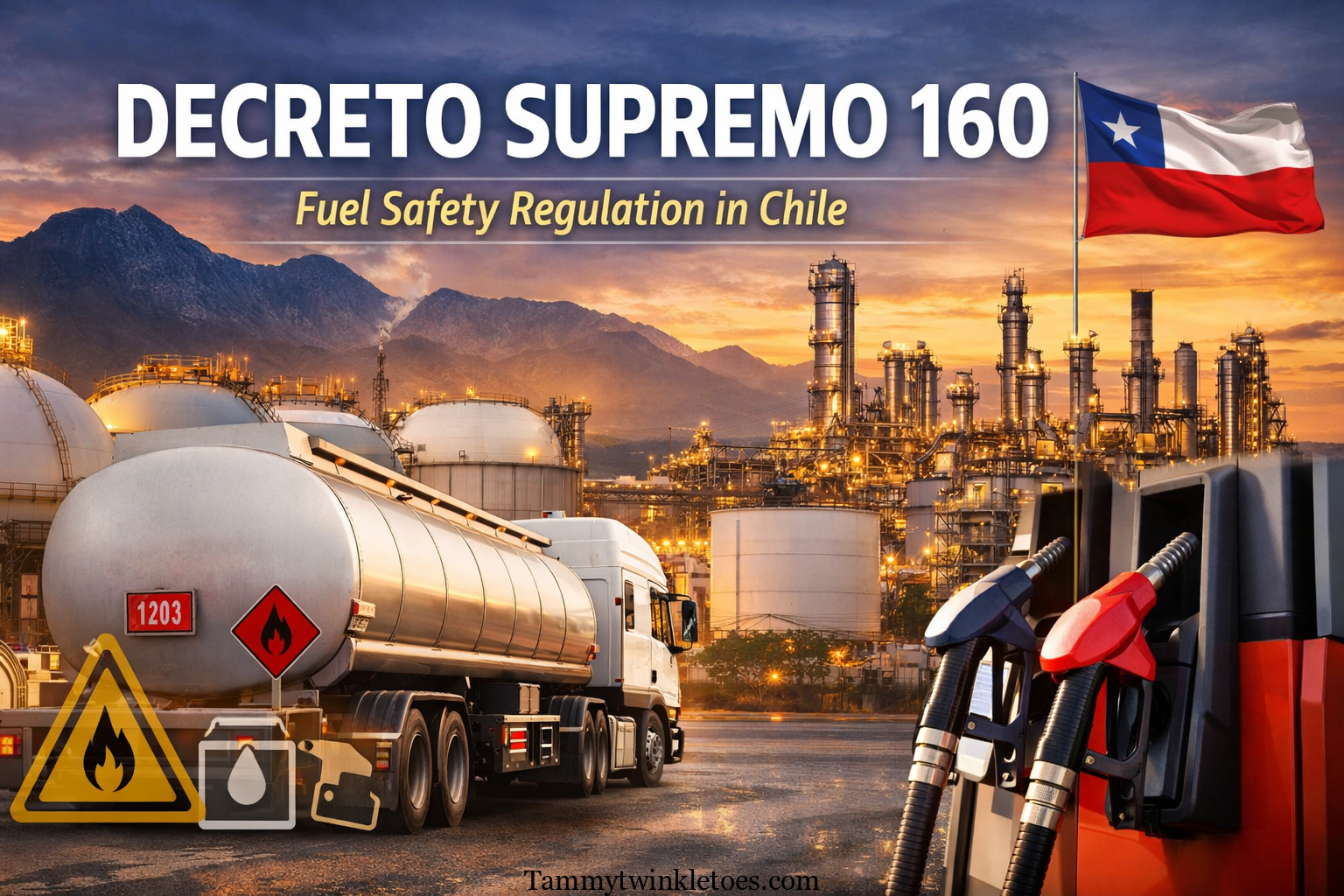
Energy infrastructure plays a vital role in every modern society, and fuels such as gasoline, diesel, and kerosene are essential to transportation, industry, and daily life. However, because these fuels are flammable and potentially hazardous, governments must establish strict safety regulations to prevent accidents and environmental damage. In Chile, one of the most important regulatory frameworks governing fuel safety is Decreto Supremo Nº 160.
This regulation establishes the safety requirements for installations and operations related to liquid fuels across the country. From production facilities and refineries to transport systems, storage tanks, and service stations, Decreto Supremo 160 creates a comprehensive framework designed to ensure that fuel infrastructure operates safely and responsibly.
Understanding this regulation is essential for companies involved in the fuel supply chain, as well as for policymakers, engineers, and safety professionals who work in energy infrastructure. The decree not only sets technical standards but also outlines responsibilities, oversight mechanisms, and operational practices intended to protect people, property, and the environment.
Introduction to Decreto Supremo 160
Decreto Supremo 160 is a Chilean government regulation issued by the Ministry of Economy, Development and Tourism of Chile. The regulation was developed to modernize and strengthen safety standards for the handling of liquid fuels. It provides detailed guidelines covering the design, construction, operation, and maintenance of installations that produce, refine, transport, store, distribute, or supply fuels.
The regulation applies to fuels derived from petroleum as well as certain biofuels that are distributed within Chile’s energy system. Because these substances can pose significant risks if improperly handled, the decree establishes strict engineering and operational requirements to minimize potential hazards.
Supervision and enforcement of the regulation are carried out by the Superintendence of Electricity and Fuels, which is responsible for monitoring compliance and ensuring that companies adhere to national safety standards. This oversight plays a critical role in maintaining the integrity and reliability of Chile’s fuel infrastructure.
The Purpose and Importance of Decreto Supremo 160
The main objective of Decreto Supremo 160 is to ensure that the entire lifecycle of liquid fuels is managed safely. From the moment fuel is produced or refined until it reaches the final consumer at a service station or distribution point, each stage must follow strict safety requirements.
This regulation was created in response to the inherent risks associated with handling flammable substances. Fuel leaks, fires, and explosions can have devastating consequences if safety measures are not properly implemented. By establishing clear technical guidelines and operational procedures, the decree helps reduce these risks and protects workers, nearby communities, and the environment.
Another important goal of the regulation is to standardize safety practices across the energy sector. Before modern safety frameworks were introduced, different facilities might follow different procedures, which could lead to inconsistencies in safety management. Decreto Supremo 160 creates a unified set of standards that all relevant installations must follow.
As a result, the regulation has become a cornerstone of Chile’s national energy safety policy. It ensures that fuel infrastructure operates with a high level of technical reliability while supporting the country’s broader energy needs.
Scope of the Regulation
One of the defining features of Decreto Supremo 160 is its broad scope. Rather than focusing on a single part of the fuel industry, the regulation addresses the entire supply chain of liquid fuels.
The decree covers operations related to fuel production, refining, transportation, storage, distribution, and supply. Each of these stages involves specific risks and therefore requires carefully designed safety protocols.
For example, production and refining facilities must follow detailed engineering standards to ensure that equipment, pipelines, and processing units are designed to handle high temperatures, pressures, and flammable substances. These standards help prevent mechanical failures and operational accidents that could result in dangerous incidents.
Transport systems are also regulated under the decree. Liquid fuels are often transported using tanker trucks, pipelines, and other specialized infrastructure. Because fuel transportation involves moving hazardous materials over long distances, strict safety requirements are necessary to prevent spills, leaks, and explosions.
Storage facilities represent another critical area addressed by the regulation. Fuel depots and tank farms must be constructed using materials and designs that can safely contain large volumes of flammable liquids. Additionally, these facilities must implement protective measures such as fire suppression systems, ventilation, and monitoring equipment.
Finally, the regulation also governs distribution and supply operations. Service stations, fuel distribution terminals, and other supply installations must comply with operational safety standards that protect both employees and customers.
Technical Safety Requirements
At the heart of Decreto Supremo 160 are the technical safety requirements that installations must follow. These requirements cover multiple aspects of fuel infrastructure, including engineering design, equipment certification, operational procedures, and maintenance practices.
When constructing or modifying fuel facilities, engineers must ensure that all infrastructure meets the safety standards established by the regulation. This includes the design of fuel tanks, piping systems, loading and unloading equipment, and safety barriers that prevent accidental spills.
Electrical systems used in fuel installations must also comply with strict safety guidelines. Because flammable vapors may be present in these environments, electrical equipment must be designed to prevent sparks or static electricity that could ignite fuel vapors.
Another key element of the regulation involves inspection and maintenance procedures. Facilities handling liquid fuels must conduct regular inspections to verify that equipment is functioning correctly and that safety systems remain operational. Preventive maintenance programs help identify potential problems before they lead to accidents.
These technical requirements ensure that installations maintain a consistent level of safety throughout their operational lifecycle.
Fuel Storage and Infrastructure Standards
Fuel storage is one of the most sensitive aspects of liquid fuel management. Large volumes of flammable liquids stored in tanks or depots can pose serious risks if infrastructure is not properly designed or maintained.
Decreto Supremo 160 establishes detailed standards for the construction and operation of storage facilities. Tanks must be built using materials capable of safely containing fuels under various environmental conditions. Additionally, storage installations must maintain safe distances from surrounding structures to minimize the impact of potential incidents.
Facilities are also required to implement systems that detect leaks, monitor pressure levels, and prevent the buildup of hazardous vapors. These technologies help operators respond quickly to potential problems and prevent accidents before they escalate.
By regulating storage infrastructure so carefully, the decree significantly reduces the likelihood of environmental contamination or catastrophic accidents.
Regulation of Fuel Transport Systems
Transporting fuel presents unique challenges because the product must move through public roads, pipelines, or distribution networks. Decreto Supremo 160 therefore includes provisions that regulate how fuel transportation systems must operate.
Tanker trucks used to transport fuel must be equipped with specialized tanks and safety mechanisms designed to prevent leaks or spills during transit. Drivers and operators must also follow specific procedures when loading, transporting, and unloading fuels.
Pipeline systems are another important component of fuel transport infrastructure. These systems must be designed with protective measures that detect pressure changes or leaks, allowing operators to respond quickly if problems arise.
Government Oversight and Compliance
The enforcement of Decreto Supremo 160 relies on strong regulatory oversight. The Superintendence of Electricity and Fuels plays a central role in supervising fuel installations and ensuring that companies comply with safety requirements.
This agency conducts inspections, reviews technical documentation, and certifies installations before they begin operation. Facilities that fail to meet safety standards may face penalties, including fines or suspension of operations.
Companies operating within the fuel industry must maintain detailed records of their safety procedures and operational activities. These records help regulators verify compliance and ensure that facilities continue to meet safety requirements over time.
Such oversight is essential for maintaining public trust in the safety of energy infrastructure.
The Role of Decreto Supremo 160 in Environmental Protection
In addition to protecting people and infrastructure, Decreto Supremo 160 also contributes to environmental protection. Fuel spills and leaks can contaminate soil and water resources, causing long-term ecological damage.
By requiring secure storage systems, leak detection technologies, and proper operational procedures, the regulation helps reduce the likelihood of environmental contamination. Facilities must also follow procedures for managing waste and responding to emergencies involving fuel spills.
These environmental protections reflect the broader commitment of Chile’s regulatory framework to sustainable and responsible energy management.
Ongoing Updates and Regulatory Evolution
Like many technical regulations, Decreto Supremo 160 continues to evolve as new technologies and safety practices emerge. Government authorities periodically review the regulation and introduce modifications to strengthen safety requirements or adapt to changes in the energy industry.
These updates ensure that the regulation remains relevant and effective in addressing modern safety challenges. As the energy sector continues to develop, the principles established by the decree provide a strong foundation for maintaining safe fuel infrastructure.
Conclusion
Decreto Supremo 160 is one of the most significant safety regulations governing the handling of liquid fuels in Chile. By establishing detailed technical standards and operational procedures, the regulation ensures that fuel infrastructure operates safely throughout the entire supply chain.
From production and refining to transport, storage, and distribution, the decree provides a comprehensive framework designed to prevent accidents and protect both people and the environment. The oversight provided by Chile’s regulatory authorities further reinforces the effectiveness of these safety measures.
As Chile continues to develop its energy infrastructure, Decreto Supremo 160 remains a critical element of the country’s regulatory system. Its emphasis on safety, engineering standards, and responsible operations ensures that the fuel industry can operate efficiently while maintaining the highest levels of protection for society and the environment.